The Vine With No Name
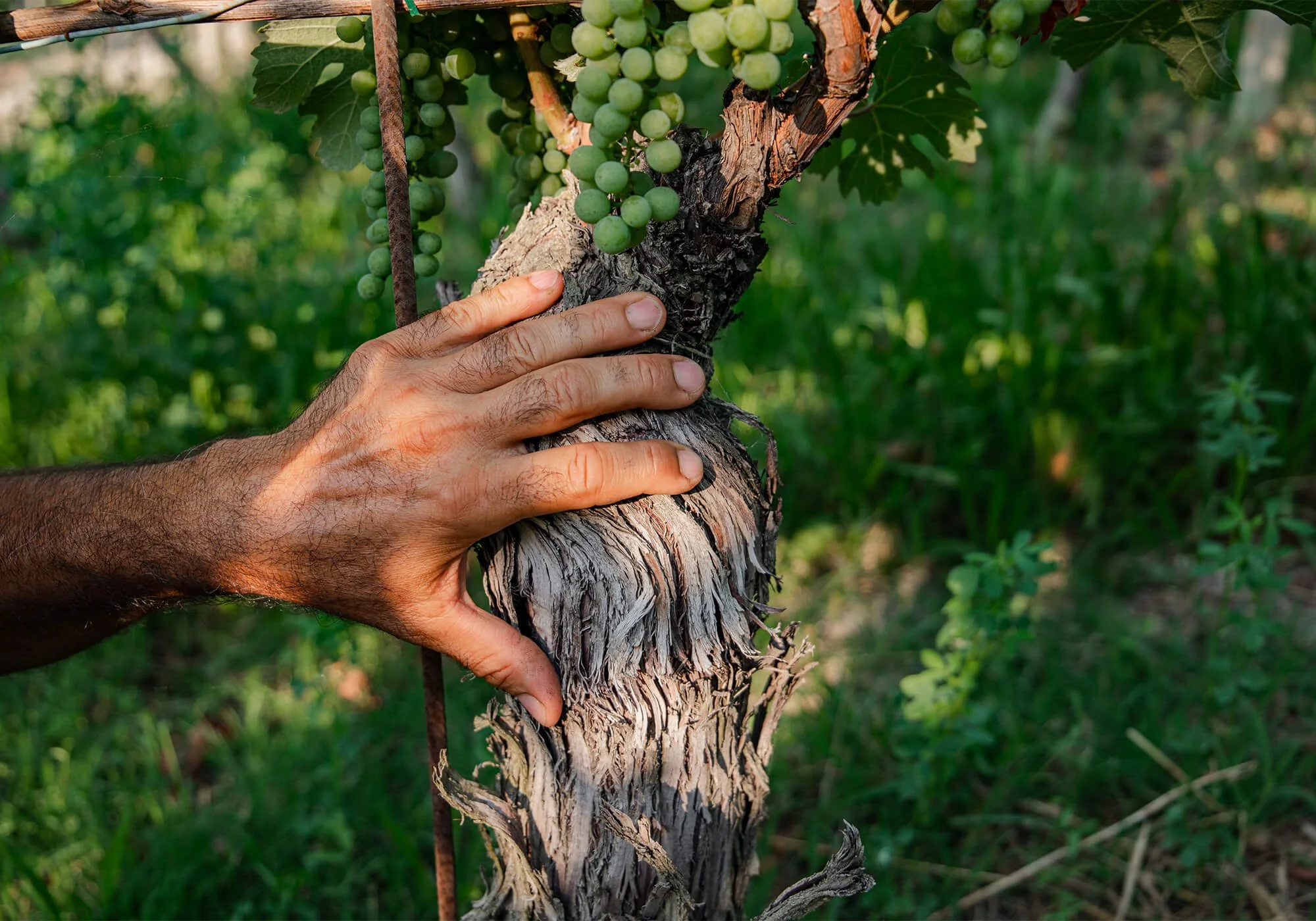
There is a vine in one of the Margheria parcels that nobody has been able to classify.
Romolo has watched it for years. The characteristics are unusual — a different ripening pattern from the surrounding plants, a yield that doesn't follow the logic of the row, something in the leaf shape that doesn't match the standard Nebbiolo biotypes documented in the ampelographic literature. It may be a distinct biotype that hasn't been formally identified. It may be a spontaneous mutation. It may be something that appeared in this specific parcel of this specific Serralunga hillside and exists nowhere else.
Romolo has never removed it.
When Gianpaolo mentions it — briefly, almost as a footnote — I ask if they've had it genetically analysed. He nods. The results were inconclusive. The vine remains unclassified. It produces less than the vines on either side of it. It ripens slightly out of sequence with the parcel. It makes the harvest marginally more complicated.
It stays.
I think about what it means to keep something you cannot name. To tend it through seasons without knowing what it is, to work around its oddness rather than eliminating it, to accept that a vineyard might contain something that resists the categories you have available.
The Serralunga limestone is full of things that resist easy reading. The soil strata are irregular, compressed in ways that produce micro-variations across a single row. The vine at Margheria fits the place, in that sense.
Unknown. Tended anyway.
Some forms of patience have no endpoint. You just keep showing up.
Luigi Pira farms Margheria, Marenca, and Vigna Rionda in Serralunga d'Alba. Five generations. Romolo Pira manages the vineyards. Annalisa and Elena Pira joined in 2020.