The Road Between Valleys
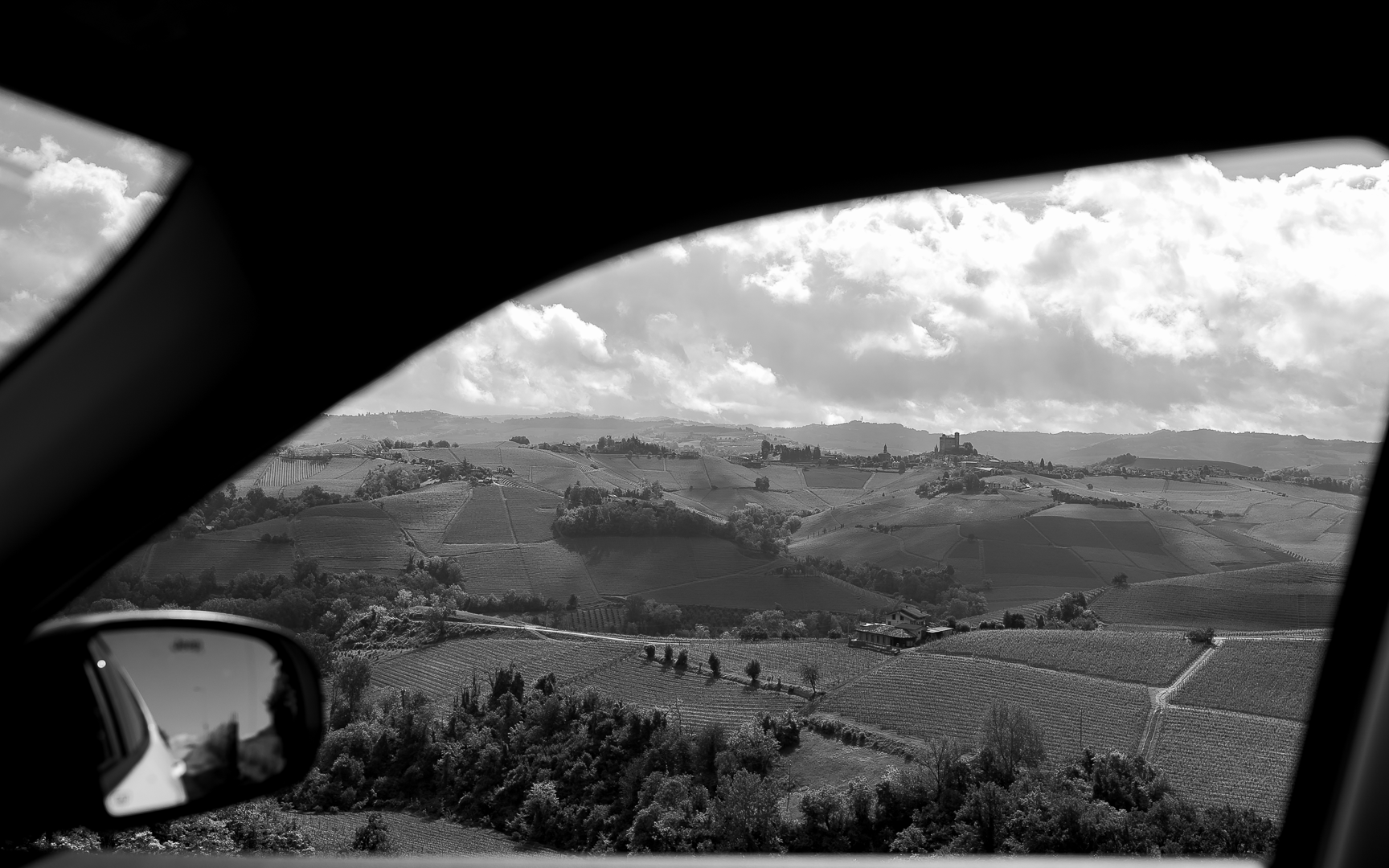
There is a road that runs between Barolo village and Castiglione Falletto that I have driven more times than I can count, and I have never driven it without slowing down at the same bend.
It is not a remarkable bend. The road is narrow, the verge is close, and the view opens for about four seconds before the vines close it again. But in those four seconds, on a clear day in early spring before the leaves have come, you can see both valleys at once — the one falling west toward La Morra and the one falling east toward Serralunga, with the ridgeline of the denomination running between them like a spine.
The geological fault that created this ridgeline is not visible. What is visible is its consequence: two distinct wine-growing worlds separated by a few kilometres of road. The western side — La Morra, Barolo — is Tortonian soil: softer, sandier, more yielding. The vines there ripen earlier, the wines they produce tend toward generosity and perfume, opening relatively early and giving pleasure without requiring decades of patience. The eastern side — Serralunga, Castiglione Falletto — is Helvetian limestone-marl: harder, more compressed, the Lequio formation that forces vine roots down through stone. The wines from this side are austere in youth, demanding in adolescence, and remarkable in old age.
Same grape. Same appellation. Same name on the bottle. Entirely different soils, entirely different wines.
This is what makes Barolo irreducible. You cannot summarise it. A Barolo from La Morra and a Barolo from Serralunga share the grape variety and the denomination and almost nothing else in character. The person who discovers Barolo through a La Morra producer and then opens a Serralunga Vigna Rionda will not immediately believe they have come from the same place. The person who travels in the opposite direction will feel equally disoriented.
The denomination allows both. More than that — it requires both. The MGA system that has formalised single-vineyard labelling since 2010 is in part an attempt to make this visible on the label: to tell the drinker which side of the ridgeline the grapes came from, which soil they grew in, what kind of patience the wine will ask. It works imperfectly because the geological complexity of the Langhe exceeds what a label can communicate. But it is better than asking someone to learn an entire appellation before opening a bottle.
At that bend in the road, for four seconds, both valleys are visible simultaneously. The La Morra hillsides to the left, terraced and pale, running down toward the valley floor. The Serralunga ridge to the right, steeper and more compact, the limestone close to the surface. The same sky over both.
I think about what this road meant before the denomination existed in any formal sense. When the grapes from both valleys were sold to négociants in Alba who blended them without consideration for origin, when the word Barolo was a category rather than a geography, when the individual hill and its specific soil were invisible to everyone except the farmer who worked them. The road ran between the same two valleys then. The geological difference was the same. The vines felt it. The winemakers knew it. It just wasn't on the label.
What the MGA system did was not create something new. It made visible what was always there.
The bend in the road has always shown you both valleys at once. What changed is that we now have words for what we are seeing.
I slow down every time not because the view demands it. I slow down because four seconds is enough, if you are paying attention, to understand that the word Barolo is a single name for two different kinds of patience, grown in two different kinds of stone, under the same October fog.
Both are worth the time.
The most important things in life are sensed, not seen. // Arnt