The Human Premium
what the vignaiolo already knew.
A report landed in my inbox this week. Research from a global agency, data-heavy, professionally packaged. The headline finding: human-made content is becoming a premium signal.
As AI floods every feed and inbox, audiences are starting to sense the difference. Not always consciously. But they feel it. The data says 47% of people globally still believe humans have the advantage in creativity and imagination. Only 30% say AI does.
The gap isn't surprising to me. What surprised me was that it took a research report to say it out loud.
The Langhe has known this for centuries.
Walk into any cellar in Castiglione Falletto, Serralunga, La Morra. Watch how a vignaiolo moves through his own vineyard. He doesn't explain much. He doesn't need to. The knowledge is in the hands, the posture, the silence between sentences. It was never built to scale. It was built to last.
That is the whole point.
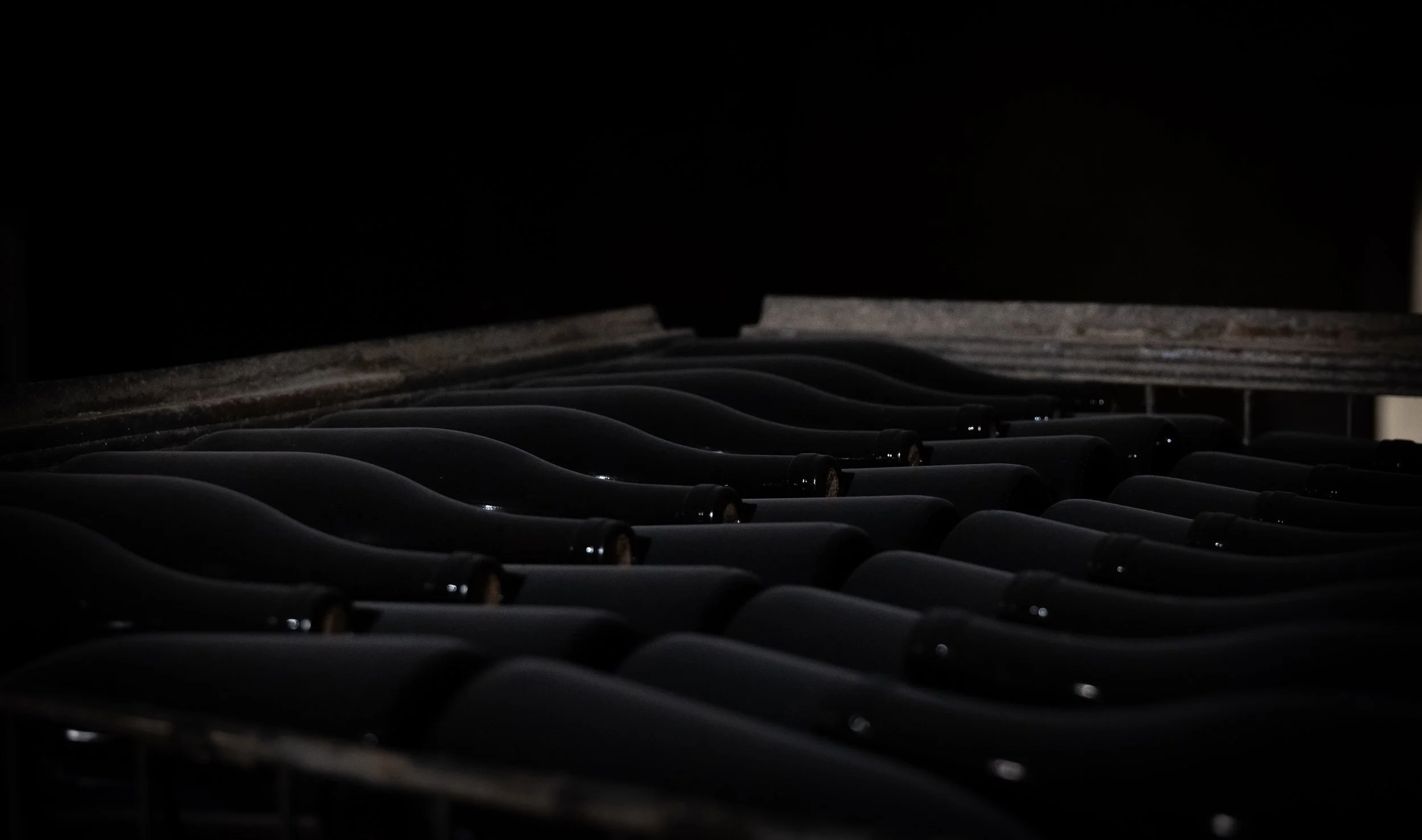
A Barolo made the traditional way is not efficient. The maceration is long. The aging is long. The yield is low. Every decision requires a human being standing in a specific place, reading a specific sky, feeling a specific soil underfoot. You cannot automate that judgment. You can only cultivate it, over decades, passed from one set of hands to another.
The wine is proof that a human was here.
The VML report points to livestreaming as one signal. Audiences are watching 36 billion hours of live video a year, partly because it's unedited. Mistakes and glitches included. The rawness is the point. In a feed of polished, generated content, imperfection reads as real.
I find that interesting. Because the producers I've spent time with in the Langhe have never tried to hide their imperfections. Claudio Fenocchio talks about vintages the way a farmer talks about weather. Honestly. The difficult years are part of the story, not an embarrassment to manage.
There is something quiet in that. A confidence that doesn't need to perform.
The report frames this as an emerging split. AI content: abundant, functional. Human content: authentic, trusted, increasingly prestigious.
But for Barolo, the split was always there. It just didn't have a name.
The wine was never competing on efficiency. It was never trying to be accessible to everyone, everywhere, at any price. It was offering something else: evidence. Evidence that a person waited. That a family made decisions no algorithm would sanction. That the ground under their feet shaped what ended up in your glass.
That's not a marketing position. It's a way of living.
I think about this when I'm writing here. This publication was never going to be fast. It was never going to win on volume. I write about people and places that move at their own pace. That's the whole premise.
But I notice now that the premise has broader context than I first thought.
We are entering a period where the simple fact of human effort becomes legible. Where audiences can sense, even if they can't articulate, that something was made by a person who had skin in it. Who cared about the outcome. Who stood somewhere real and paid attention.
The vignaiolo has been offering exactly that, every vintage, for as long as there have been vines on these hills.
Maybe the rest of the world is just catching up.
Integrity is the refusal to be rushed. // Arnt
If you are also navigating the 'quiet work in the dark,' join my list. I send one meditation every season on the art of waiting and the essence of Barolo.