The Wine That Waited Thirty Years to Be Ready
The cellar is under the village of Barolo. You descend into it from the production floor, and what meets you is the smell — old oak, limestone, the particular cool damp of a room that has been doing the same thing for over a century.
The botti are enormous. The light is low. These are the halls of silence, as the Rinaldis call them — and the name is not poetic licence. Down here, nothing moves quickly.
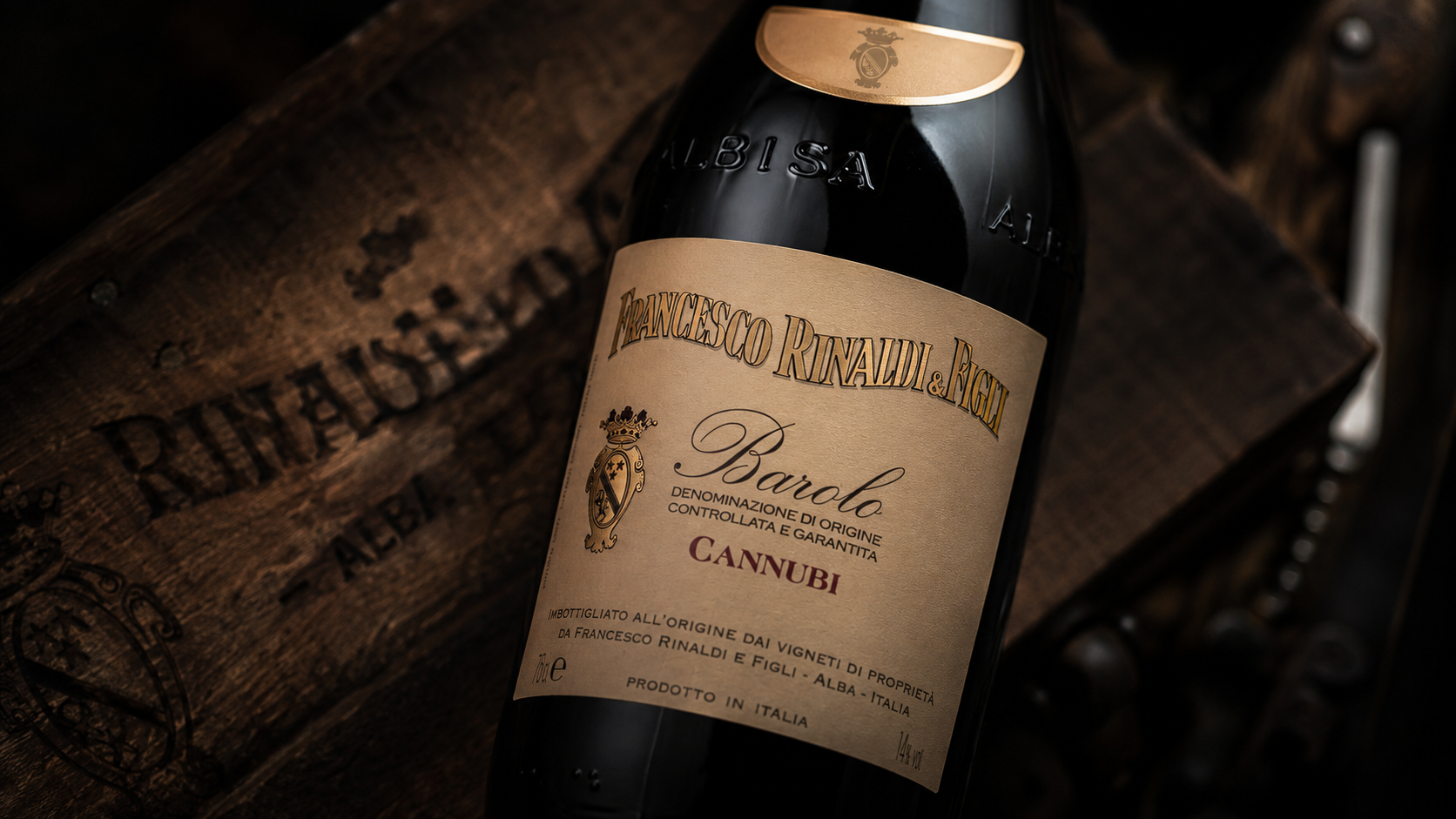
I am imagining the 2018 Cannubi in this cellar, still in the botti, two years into its long rest in Slavonian oak. Because the wine that eventually reaches a table from this room takes six years from harvest to release — three in oak, further time in bottle — and it arrives not as a young wine that needs ageing, but as something already shaped by patience before it is ever opened.
The Wine as a Person
The 2018 vintage was not an easy one. Difficult years in Barolo tend to be reductive — they produce wines that make critics cautious and collectors hesitant. But Cannubi is not easily rattled by a complicated year. Wine Enthusiast described the 2018 Cannubi as earthy, savory, and full-bodied, with game, truffle, raspberry, and a darkly mineral backbone. That description, stripped of its tasting-note format, points to something precise: a wine that has absorbed the year's difficulty and converted it into complexity.
If the 2018 Cannubi were a person arriving at a dinner, it would be someone who had weathered something significant and came out quieter for it. Not damaged. Quieter. The kind of person whose sentences are shorter because they have learned that most things don't require elaboration.
The wine opens with an earthiness that is not a flaw — it is character. The calcareous clay of the Cannubi hill, the Tortonian soil that sits at the geological intersection of the denomination's two great terroir types, is present in the glass in the way that limestone is present in well water: not as a flavour exactly, but as a condition of everything that follows. Underneath, the fruit of Nebbiolo from a vine planted in 1906's direct descendants — Cannubi has been in this family for over a century — is dark cherry and dried rose, persistent rather than exuberant.
Both improve immeasurably if decanted an hour prior to serving. This is not a recommendation. It is a requirement. The 2018 Cannubi does not open without time and air. It is waiting, in the glass, for you to demonstrate that you are willing to wait too. Once you have — once the wine has breathed and settled and begun to speak — what you get is something balanced, precise, and deeply unhurried. A wine that was made in 1870's tradition, aged in a room that has not changed, and arrived at your table carrying 150 years of accumulated knowledge about how to make Nebbiolo from this specific hill behave.
The Stoic Lesson
Paola and Piera Rinaldi did not change the approach for the 2018. A difficult vintage is not, in the traditional Barolo producer's logic, a reason to modify technique. It is a reason to trust it. The long maceration extracts what the vintage offers. The Slavonian oak softens without imposing. The years in the cellar integrate what the year's weather created.
This is the patience that traditional Barolo requires from its maker as much as its drinker: the refusal to intervene, to correct, to compensate. The wine of a difficult year, made with the same discipline as the wine of a great year, and allowed the same time, will be a different wine — but it will be an honest one.
The 2018 Cannubi is honest. It does not pretend to be the 2016. It is what it is: a wine from a testing year, made in a cellar that does not negotiate with the calendar, by two women who are doing what their family has always done and expecting the wine, in its own time, to justify them.
It will.
Pazienza is not waiting for time to pass; it is honoring time's work. // Arnt
Francesco Rinaldi e Figli Barolo Cannubi 2018. Vine age: 50+ years on the Cannubi Boschis sub-section (2.2 ha). Aged 36+ months in 5,000-litre Slavonian oak botti. No new oak. Traditional maceration 25–30 days. Released in year six from harvest. Paola and Piera Rinaldi, fourth generation. Francesca Rinaldi, Fifth Generation.