The Slope
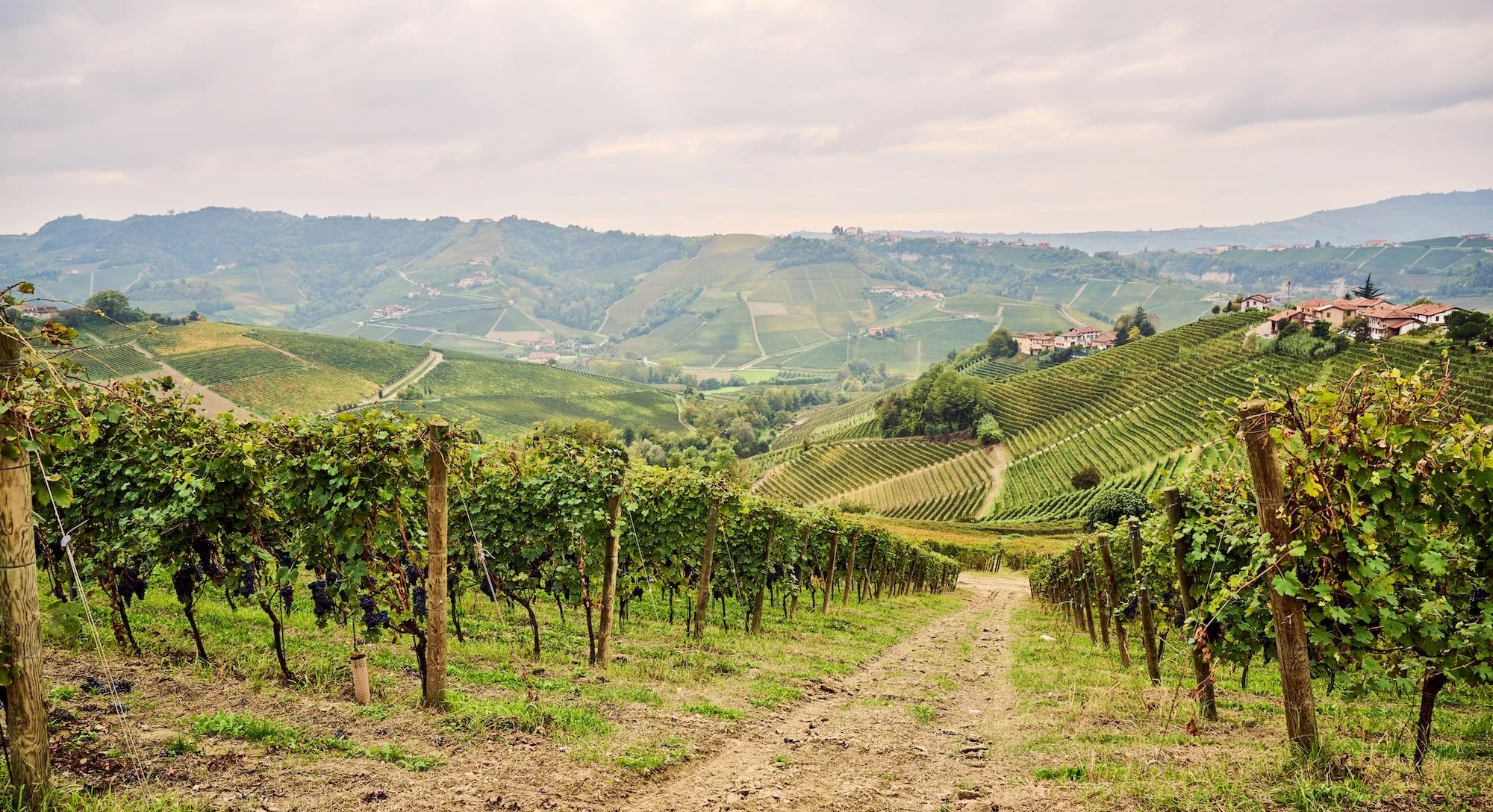
The first time you stand at the base of one of Barolo's steeper hillsides and look up, the word that arrives is not beautiful. It arrives later, after the initial calculation, because the first response is practical.
How does anyone get up there? How do they harvest that? How do they go back, day after day, season after season, and do the work that needs doing on a gradient that a tractor cannot safely navigate?
Forty-five degrees is not a vineyard angle. It is a wall you farm.
There are sections of the Barolo denomination — in Monforte, in Serralunga, along the steeper eastern faces above Castiglione Falletto — where viticulture is conducted by hand not because of tradition or philosophical preference, but because there is no mechanical alternative that works. The rows are narrow. The terraces are ancient, some of them reinforced by dry-stone walls that predate the DOCG, that predate the modern appellation system entirely, that exist because the hillside would otherwise slide downward over centuries. Someone built those walls. Someone maintains them. Someone walks these rows sideways, feet planted at an angle, body turned to stay on the slope, working in conditions that no job posting would describe without losing applicants.
The Langhe word for this — viticoltura eroica, heroic viticulture — is not wrong exactly, but it has been worn smooth by overuse. When critics call a vineyard heroic, they mean the wine that results is remarkable. What they are describing, though translated into admiring abstraction, is the physical reality of a person doing extremely hard work at an angle that makes every movement twice as effortful for a fraction of the yield a flat vineyard would produce.
The yield is what matters. Not as a volume number — as a logic.
A vine on a forty-five-degree slope in compact limestone-marl is under stress. The roots go deep because surface water drains away immediately. The canopy is exposed on all sides because the rows are too steep to shade each other. The fruit ripens unevenly because the gradient creates micro-differences in sun exposure across a single row. The winemaker deals with that unevenness by hand-sorting, by multiple passes through the vineyard at harvest, by the kind of attentive seasonal labour that machines cannot replicate because machines cannot read.
And what comes from that difficulty — from the depth of root, the slow ripening, the extended hang time on the hillside — is structure. Acid. Tannin. The capacity to age for twenty years without losing its argument. The slope does not make Barolo charming. It makes Barolo serious.
This is not a new observation. Every producer in the Langhe who farms a steep site knows that the difficulty is the mechanism, not the obstacle. That the vine's stress response — growing deep, ripening slowly, concentrating what it produces because it produces little — is precisely what generates the wine's longevity. You could farm the valley floor. It would be easier. The wine would not be this.
There is a version of this that becomes romantic quickly: the noble struggle, the heroic farmer, the difficult terrain and the great wine that comes from it. I am wary of that version because it aestheticises work that is genuinely hard, in ways that serve the person writing about it more than the person doing it.
The simpler observation is this: the slope makes demands. The people who farm it have decided, year after year, that what the slope produces is worth meeting those demands. That is not romance. It is arithmetic, with a very long time horizon.
Standing at the base of the hill, looking up at the rows above me, I do the maths myself. The gradient, the narrow terraces, the pale Helvetian soil crumbling at the edges. The vines bare in early spring, dark wood against white stone.
What comes from up there has been worth it for centuries.
The slope is still there, making the same calculation.
Integrity is the refusal to be rushed. // Arnt