Vigna Rionda 2016
— The 50-Year Wine // Luigi Pira
There are bottles you open for the evening. And there are bottles you open for the decade.
The 2016 Luigi Pira Vigna Rionda is the second kind.
You know this before you pour it—in the weight of the bottle, in the pale, almost ghostly white label, in the quiet confidence of a wine that has been in no hurry to arrive at your table and will be in no hurry to reveal itself once it does. The 2016 Barolo vintage is already legendary in the Langhe—a year of warm days, cold nights, and a September that stretched long and golden before a clean, dry harvest. In Serralunga, where the limestone soils held their structural tension even in the warmth, the vintage produced wines of extraordinary concentration and poise.
We open it on a quiet Sunday. No guests, no occasion. Just two glasses, a simple meal, and the understanding that this bottle will ask more of us than we might expect.
The color is translucent garnet—Nebbiolo's characteristic transparency, the color of old rubies held to the light. It tells you immediately that this wine will not overwhelm with density or opacity. It will instead draw you forward, towards something that becomes more complex the longer you look.
The nose opens slowly, like a room that has been closed for years—at first just the suggestion of something beautiful, then gradually: macerated cherry, dried rose petals, blood orange, a mineral darkness that is difficult to name but immediately recognizable as Serralunga. There is mint, there is licorice, there is the deep forest-floor quality that old limestone produces when Nebbiolo has had time to interpret it properly.
It smells like somewhere specific. Not just a wine—a place.
On the palate, the 2016 Vigna Rionda delivers what Serralunga always promises and rarely makes comfortable: tannins of extraordinary structure, fine-grained but insistent, coating every surface of the palate with a mineral grip that does not release for a long time.
This is not a flaw. This is a declaration.
Gianpaolo Pira ages the Vigna Rionda partially in French barrique and partially in large botte—a pragmatic approach that seeks to shape without obliterating the site's character. The result is a wine that carries a little of the modern world's precision without surrendering the ancient world's structure.
The wine is slightly closed at first—a point of initial reduction that, rather than frustrating, serves as a kind of instruction. Come back in an hour. Or a year. Or ten.
When we return to the glass ninety minutes later, the transformation is startling.
The reduction has lifted. The fruit has expanded. The tannins have not softened—they have settled, found their position within a structure that now feels less like a wall and more like an architecture. The mineral thread that runs through the wine has intensified, connecting nose and palate and finish in a single sustained line of limestone and time.
This is what the tasting note cannot capture: the experience of a wine becoming in real time.
4,000 bottles were made from this vintage. In the mathematics of global wine consumption, this is almost nothing—a whisper in an ocean of production. By the time you account for collectors, restaurants, and the producer's own allocation, the number of people who will drink this wine at the moment it is genuinely ready—perhaps 2028, perhaps 2035—is vanishingly small.
This scarcity is not a marketing calculation. It is a consequence of farming 12 hectares of Serralunga's most demanding limestone by hand, harvesting Nebbiolo that ripens weeks later than almost anything else in the denomination, and making a wine that genuinely cannot be produced in larger quantities without diluting the very thing that makes it worth producing at all.
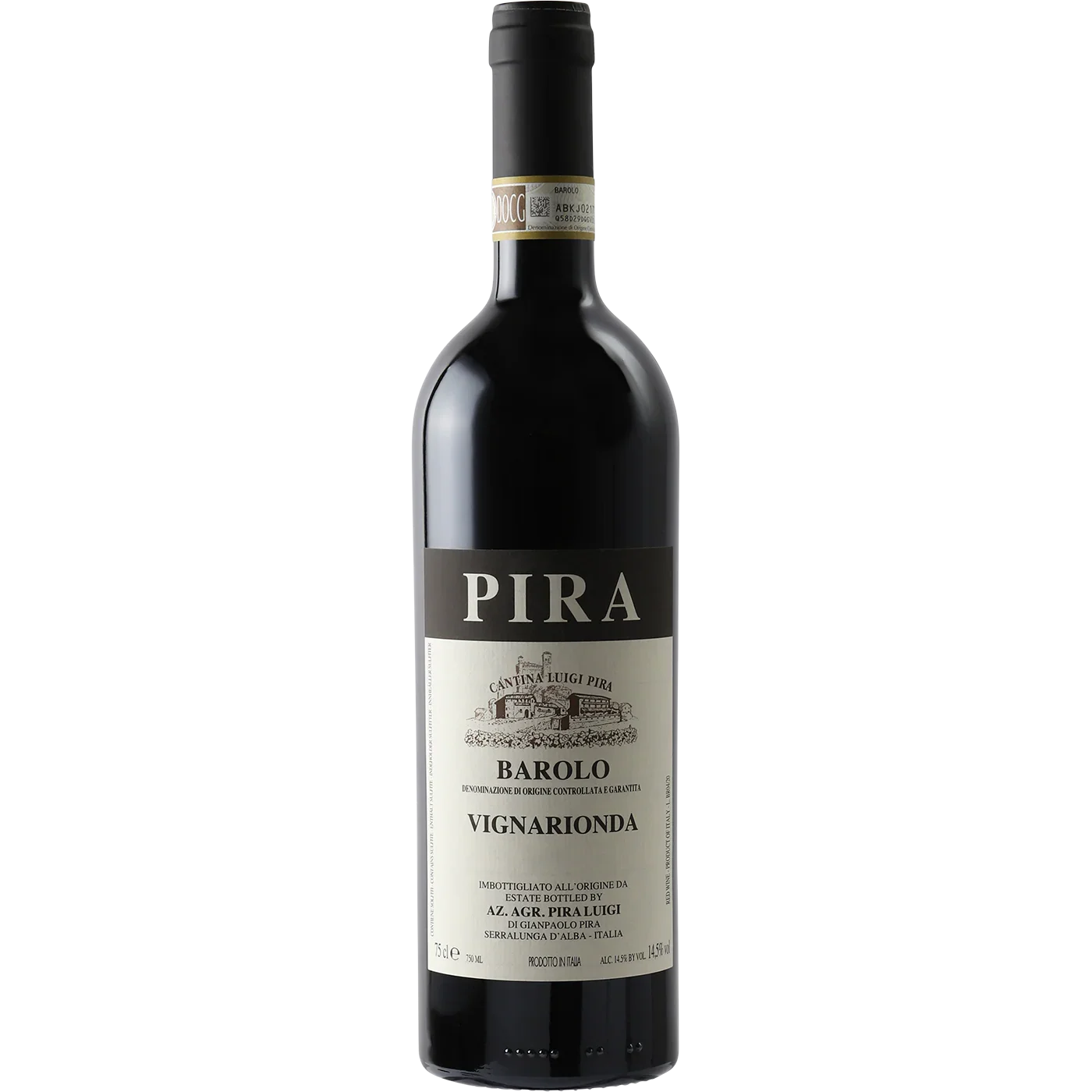
We are not drinking a product. We are drinking a decision—a family's decision, made across five generations, to stay small, stay specific, stay honest.
The finish of the 2016 Vigna Rionda is long in the way that great Serralunga finishes are always long: not with the warmth of fruit lingering pleasantly, but with the persistence of structure—tannin and mineral and acid holding their position for minutes after the wine has gone.
It is the finish of a wine that knows exactly what it is.
I call this the 50-year wine not because you must wait 50 years to drink it—though those who do will find something extraordinary—but because every element of this bottle carries the weight and patience of half a century. The vines that produced it were old before the estate's reputation was established. The soil beneath them was formed 13 million years ago. The family tending them arrived in the 19th century and has not left.
You open a bottle of Vigna Rionda and all of that time is in the glass.
Not as metaphor. As taste.
Integrity is the refusal to be rushed.
// Arnt