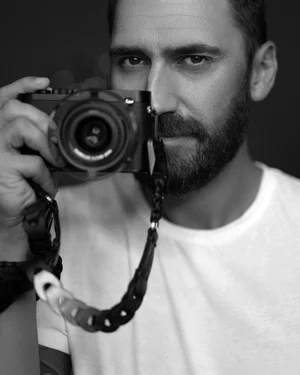
Portrait: Elena and Àlex
The story begins in a village where the estate no longer lives.
Brovia was founded in Sinio in 1863. The founder passed away in 1932, leaving a six-year-old son. The work stopped for twenty-one years. It did not resume until 1953, when Giacinto — that boy, now grown — restarted in Castiglione Falletto on land his mother had bought during the forties, through the war years, while managing the estate alone. A different commune. The same name. Two decades of silence folded back into the work as if continuity were simply a matter of will.
That decision — to stay, to restart, to refuse the easier path of selling — is the founding act of the modern Brovia estate. Everything Elena and Àlex are doing now is downstream of Giacinto's mother choosing not to give up when giving up would have been reasonable.
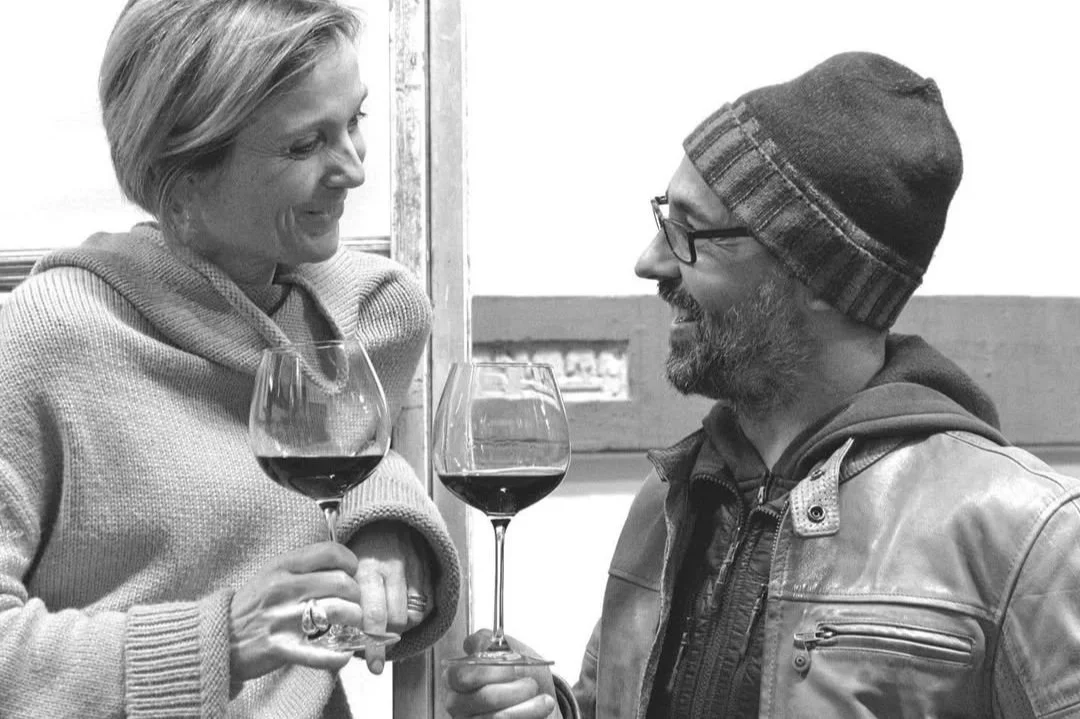
Elena Brovia and Àlex Sanchez lead the estate together. Elena grew up on it — the daily proximity, the inherited knowledge of these specific rows across Rocche di Castiglione, Ca' Mia, Garblèt Süe, and Villero, the unhurried accumulation of what it means to grow up on one piece of ground and never fully leave it. Àlex arrived from Spain, via Burgundy, via several years in serious cellars on other continents. He came to Castiglione Falletto by choice, which is the longer path and possibly the more deliberate one.
What they have built together is a working argument for why both kinds of knowledge matter. Elena holds the place. Àlex holds the comparative perspective — the understanding of what this vineyard does differently from others he has known, which is a kind of knowledge only available to someone who has stood in other vineyards and noticed the difference. Together they make wine that is precise and rooted, classical without being frozen.
Giacinto, Elena's father, passed away in 2014. In his final years, he was less active in the daily work but present — available, the way a reference point is available. Àlex told me that knowing Giacinto was there gave them, in difficult moments, pace di mente: peace of mind. The knowledge that someone who had done this for decades was reachable, and that his judgement was available. After he was gone, that quality of presence remained, in the way that deeply absorbed knowledge persists in the people who were close enough to receive it.
At the corner of the estate building stands a permanent sculpture — aluminium casting, made by Samuel Di Blasi, a local artist who met with Elena and Àlex multiple times before proposing anything, learning their philosophy and absorbing the place before he offered a single idea. Then he proposed both the work and its name: Fermento. The state of restlessness that pushes us to seek evolution while continuing to respect our roots and our identity.
The artist named what was already happening.
The vineyards — 17.5 hectares across Castiglione Falletto, La Morra, and Serralunga — are farmed with the particular attention of people who understand that the cru is not a marketing category but a description of soil behaviour, and that the job is to get out of the way of what the soil wants to say. Rocche di Castiglione is the flagship: southeast-facing, calcareous marl with sand, the kind of site that produces wines with precision and perfume, a mineral freshness that carries through even in warm years. When Àlex talks about Rocche, he talks about focus. The mineral signature that critics note — crushed stone, wildflower, the almost salty close — is the hill speaking with minimal interference.
Matthias, twenty-three, arrived back from Portugal and New Zealand last year and began working at the estate. He is Elena and Àlex's son. Fifth generation of Brovia in Castiglione Falletto. The legacy is not a weight placed on the next generation's shoulders. It is a place held open by the current one, available to those who choose it freely. Elena uses that distinction carefully. Offered, not imposed. The choice, when it arrived, came easily.
Outside the estate's entrance, the Fermento sculpture stands in the afternoon light. It does not look like a winery decoration. It looks like something that belongs to the building — part of the argument the place is making, rather than an addition to it.
The artist knew what he was naming before they did.
Integrity is the refusal to be rushed. // Arnt
Brovia was founded in Sinio in 1863, restarted in Castiglione Falletto in 1953. Elena Brovia and Àlex Sanchez lead the estate. 17.5 hectares including Rocche di Castiglione, Ca' Mia, Garblèt Süe, and Villero. Fifth generation Matthias joined in 2025.