The Summer the Vine Remembered
The Nordics. February. The kind of evening where no one is in a hurry to go outside, which means the dinner extends naturally, without anyone deciding it should. There are five of us. Someone has brought the 2017 ALESTE from Sandrone. It goes on the table without ceremony. The conversation continues around it while the wine breathes, which is exactly the right way to treat a Barolo from a hot vintage that has been in the bottle for several years and is just now beginning to open.
The Wine as a Person
The 2017 was a warm year. One of the warmest the Langhe had seen in a generation. Warm and dry through the growing season, the kind of summer that removes ambiguity from the vine and forces decisions — about when to harvest, how much to let the fruit concentrate, whether to push or to hold. At Cannubi Boschis specifically, where the vineyard sits in a small natural bowl at the northern end of the hill, south and southeast facing, the warmth accumulates. The bowl holds heat the way a cupped hand holds water. In a cool year, that makes for generosity and perfume. In a hot year, it makes for something denser, more layered, more considered.
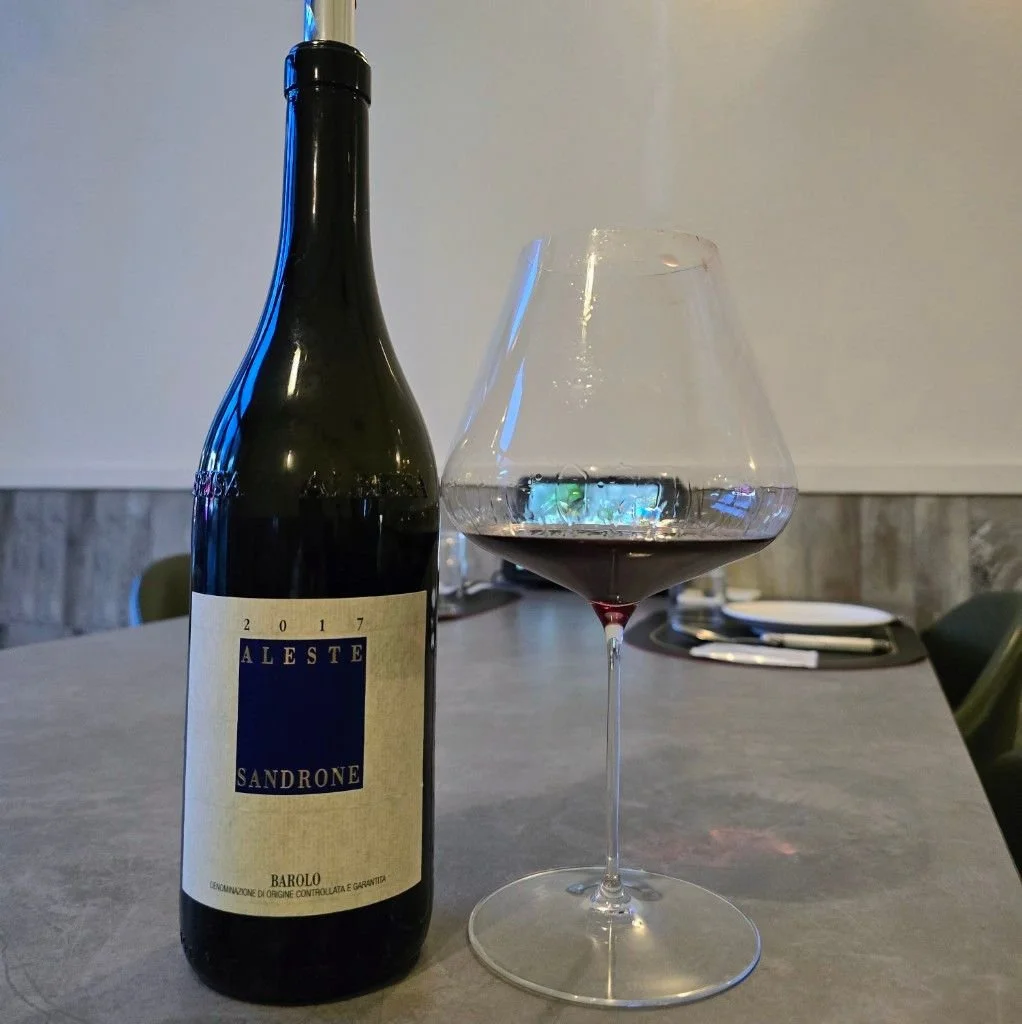
This wine arrives at the table with an opinion.
It is not quiet.
It fills the glass with a presence that is immediately felt — not aggressive, but unwilling to wait for you to come to it. Dense, deep-fruited, the dark cherry and raspberry that Cannubi always gives, but pushed further inward by the heat of the summer, concentrated rather than lifted. Then underneath: the balsamico quality the estate notes, and beneath that the mineral character of calcareous clay with sand, the cool underpinning of limestone that survives even a brutal summer. Critics noted a snobbish quality in the 2017 — a wine that knows what it is and will not simplify itself for the occasion. I understand the word. There is something in this wine that refuses easy charm. It is making an argument, not a gift.
Give it air. Thirty minutes, an hour. The tannins are fine-grained and racy, present but disciplined, beginning to integrate. The depth of fruit underneath keeps the structure honest — it is not hollow power, not warmth without substance. It is a wine that has absorbed a whole summer and is still working out what to say about it.
If it were a person arriving at that dinner, it would be the one who says very little in the first hour and becomes, by the end of the evening, the one you cannot stop listening to.
The Stoic Lesson
The 2017 vintage makes people uneasy. The heat seems, on paper, like a problem — a deviation from the elegance and restraint that the best Barolo sites are supposed to produce. Collectors who want the cool, floral precision of 2016 or the structured generosity of 2019 sometimes pass over 2017 without opening a bottle.
That is impatience in the exact shape that impatience always takes: the unwillingness to sit with something that doesn't immediately resolve.
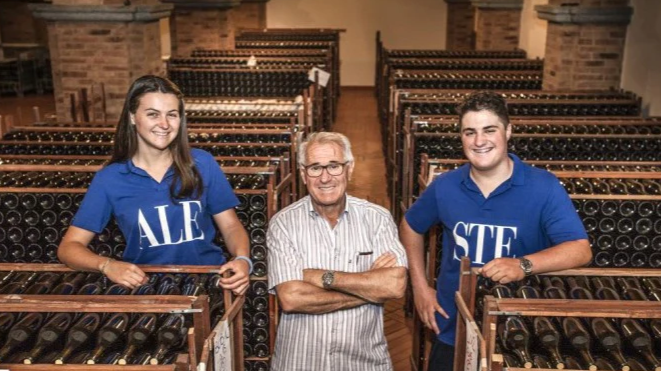
Luciano made this wine. He died in January 2023, two years before this bottle came to that Oslo table. He spent forty-five years learning Cannubi Boschis — its drainage, its heat retention, the particular way the bowl amplifies a warm summer. He did not fight the 2017 vintage. He worked with what the season gave him and made something that requires the same patience from the drinker that it required from the maker.
The estate suggests drinking it from 2027. That is not a warning. It is simply accurate.
The wine at the table is five years from its best. It is already remarkable. In five years, the tannins will have settled further, the density will have found its shape, and what is now assertive will become authoritative. The summer of 2017 will still be in the glass — it is too much a part of the wine's character to disappear — but it will carry it more quietly.
Luciano renamed this wine for his grandchildren. The bottle we drink is his work. The patience it demands is ours to practise.
Pazienza is not waiting for time to pass; it is honouring time's work. // Arnt
The 2017 growing season was the hottest on record in a generation in the Langhe. Sandrone ALESTE is produced from 1.9 hectares of Cannubi Boschis, with an average vine age of 40 years. Luciano Sandrone passed away in January 2023. Barbara Sandrone and Luca Sandrone lead the estate today.